Support

How can we help with your plate?

Search valuation guidance, selling steps, ownership checks, and common transfer questions.

Popular help articles

The core guidance most sellers need before listing, verifying, or transferring a plate.

A 5-minute walk-through of getting your plate live in front of vetted dealers.

Listing on Plateworth is free and takes about five minutes. Every listing runs in a short, focused window so verified dealers concentrate their bids during the same period — that competition is what produces a fair price.

Step 1 — Get your valuation

Enter your registration on the homepage. Our valuation engine returns a market range based on comparable historical sales, current dealer demand, and the structural traits of the plate (length, dateless vs prefix, name match, number significance).

Step 2 — Create your listing

Sign in (or sign up — it takes 30 seconds) and confirm the details: who holds the plate, where it currently sits (V750, V778, or assigned to a vehicle), and your reserve if you want one. You can always run with no reserve and let the market decide.

Step 3 — Verification

We perform a quick ownership and identity check. This is to keep dealers confident the listing is genuine — fraud-free marketplaces only work if every seller is real.

Step 4 — Bidding window

Your plate goes live. Vetted UK registration dealers see the listing simultaneously and submit competing offers. You can watch offers come in from your dashboard.

Step 5 — Accept or decline

When the window closes you accept the best offer (or decline them all). There is no obligation.
How we calculate the market range and what drives the number up or down.

A Plateworth valuation isn’t a single number — it’s a probable market range. We weight several signals to land on what real dealers are likely to pay this week, not what a wishful classifieds listing claims.

What goes into the model

  • Comparable sales: closed dealer-to-private and dealer-to-dealer transactions on registrations of the same shape (e.g. 4-letter dateless, 1+2 prefix, name match).
  • Demand signals: current open enquiries dealers have on plates that match your structural pattern.
  • Structural quality: length, repetition, name/word fit, year of issue, special-interest flags (single-letter, single-digit, sports car associations).
  • Market direction: a trailing 90-day trend so a plate priced last year against a hotter market doesn’t inflate today’s estimate.

Why the range, not a single number

A point estimate would be misleading. Two dealers running different inventory will value your plate differently — one might already hold three similar registrations and bid lower; another might have just sold one and bid hard. The range is calibrated to the 25th–75th percentile of likely accepted bids.

When the actual offers will exceed the range

It happens. Plates with strong personal-name matches or low single-digit numbers often pull above the upper bound when two dealers compete head-to-head. Conversely, dealers may pass entirely on plates with weak structure regardless of the range.

The valuation is a starting point — the real price is the highest bid you accept.

Why we verify, what we check, and how long it takes.

Identity verification protects every party in the marketplace. Dealers won’t bid hard on listings that might be fraudulent — verification is the trust backstop that lets the bidding process work.

What we verify

  • Your legal identity (name + date of birth match a government-issued document).
  • Ownership of the registration you’re listing (V750/V778 retention document or V5C logbook).
  • A valid contact channel (your verified email or mobile).

How long it takes

Most checks complete in under five minutes. If anything needs manual review (mismatched name, document quality issues), we’ll email you within one business day.

What we never do

  • Share your documents with dealers. They see your verified status, never the underlying ID.
  • Run credit checks. Verification is identity-only, not financial.
  • Store ID images longer than legally required.

The exact paperwork required, depending on how your plate is held.

If your plate is on retention

  • V750 Certificate of Entitlement (for plates that were never assigned to a vehicle), or
  • V778 Retention Document (for plates that were previously assigned and then taken off).

If your plate is currently on a vehicle

  • V5C logbook (the registration certificate).
  • V317 transfer form (we provide this and pre-fill what we can).
  • A current MOT for the vehicle (the DVLA requires this when removing a plate).

In both cases, also have

  • A valid government-issued photo ID (passport or driving licence) for identity verification.
  • Proof of address dated within the last 3 months (utility bill, bank statement).

You upload these to your dashboard during the transfer step. We never email or post documents back and forth — everything stays in your encrypted Plateworth account.

A clear walk-through of the official transfer process.

Once you accept an offer, the registration must be transferred to the buyer through the DVLA. Plateworth coordinates the paperwork — you don’t have to figure out which form goes where.

Two transfer paths

Which path applies depends on whether the plate is currently assigned to a vehicle or held on retention.

  • On retention (V750/V778): we use the existing certificate to transfer directly to the buyer’s nominee.
  • Assigned to a vehicle (V5C logbook): we first put it on retention (V317 form), then transfer to the buyer.

Timing

Direct retention transfers usually clear in 2–5 business days once the DVLA receives the documents. Vehicle removals add roughly a week. We’ll keep you updated on each milestone.

When you receive funds

Funds are held in escrow from the moment the buyer commits. They release to your nominated bank account once the DVLA confirms the transfer.

Why every dealer bidding on your plate is vetted.

Plateworth doesn’t accept bids from anonymous accounts. Every dealer in the marketplace clears a multi-step verification process before they can place a single offer.

What we verify

  • A registered UK trading entity with verifiable Companies House records.
  • A trading history in the registration market (typically 12 months minimum).
  • Proof of funds adequate for the bid sizes they want to participate at.
  • A named, KYC-verified beneficial owner.

Ongoing monitoring

Verification isn’t a one-time gate. Dealers who fail to honour accepted bids, exhibit suspicious bidding patterns, or attract complaints lose their place in the marketplace. We don’t tolerate behaviour that erodes seller trust.

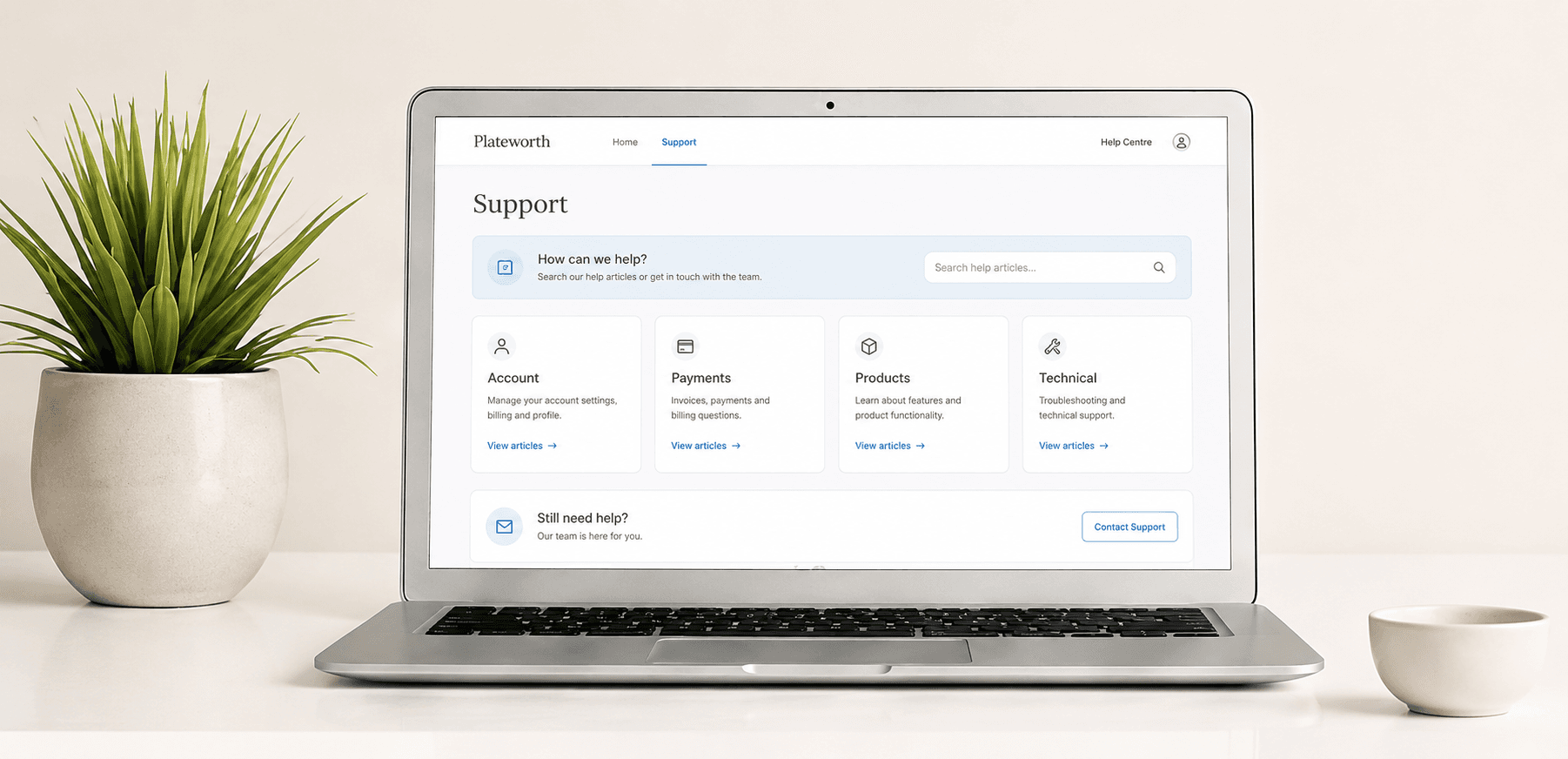
Contact support

Need a human answer?

Send us the registration, what you are trying to do, and any document context you already have.

Plateworth support dashboard workspace

We’re here to make it simple

Trusted support from real people, whenever you need it.

Frequently asked questions

A few high-level process questions, in one place.

Plateworth combines market evidence with a focused dealer offer window. You see a grounded valuation range first, then real demand from verified businesses if you choose to sell.

Yes. Listing on Plateworth is free. There are no listing fees or hidden seller charges, and you stay in control of whether to accept an offer.

Listings run in a focused window so verified dealers review the same plate at the same time. Most seller interest appears early, and you can review offers before deciding what happens next.

No. You can accept, decline, or let the window expire. If you do not accept, the plate stays with you and no transfer takes place.

You typically need a V750 or V778 if the plate is on retention, or a V5C logbook if it is on a vehicle. The seller flow tells you which document to upload.

Offers come from vetted UK registration businesses. Dealers are verified before they can participate, so your plate is shown to serious trade buyers rather than anonymous accounts.