The Feature / Guides
UK Diplomatic Number Plates Guide
Plates mentioned
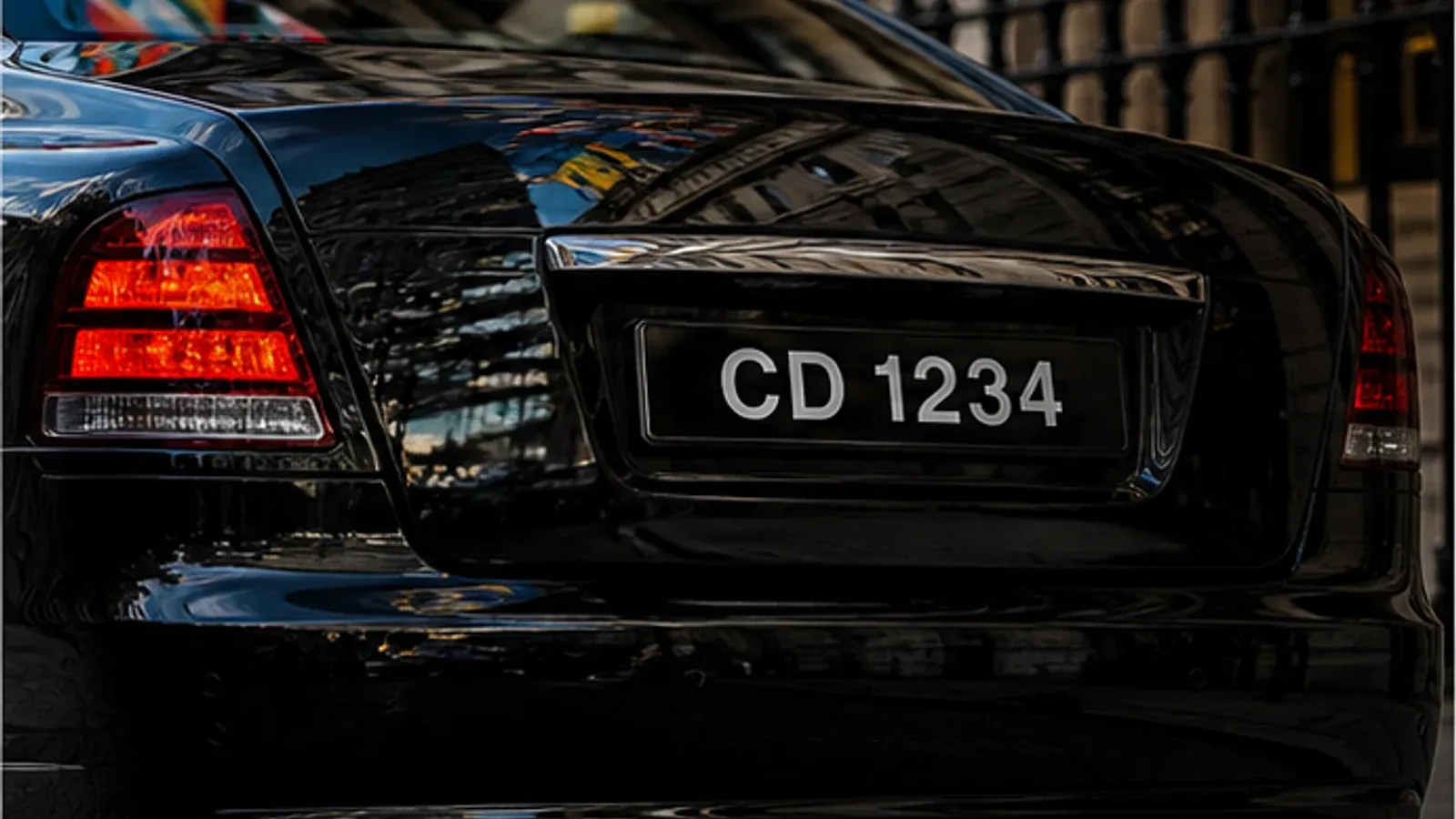
UK Diplomatic Number PlatesGuide 1. What Are Diplomatic Number Plates? Diplomatic number plates are a special category of vehicle registration issued by the DVLA in conjunction with the Foreign, Commonwealth and Development Office (FCO, formerly the FCDO). They are assigned to motor vehicles operated by foreign embassies, high commissions, consulates, and international organisations based in the UK. The current system was introduced in 1979, replacing an older arrangement where diplomatic vehicles used standard civilian plates. The new format was designed for security, identification, and administrative purposes, making it immediately obvious that a vehicle belongs to a diplomatic mission. How It All Began Most ambassadors and high commissioners travel in cars bearing a plate that reflects the name of their country. Some of these plates were originally issued to private individuals and were later acquired under the auspices of the FCO. Others were never issued in the normal course of events and were created anew or issued out of sequence — FIJ 1 for Fiji is one example. The tradition began by accident. During a visit to Belfast in 1949, New Zealand High Commissioner William Jordan spotted a recently registered car bearing the plate NZ 1 , issued in the ordinary course of events in Londonderry in January of that year. Struck by how appropriate it would look on an official vehicle, his host arranged to acquire it, and it was placed on the High Commissioner's Rolls-Royce. At the time, the New Zealand High Commission was in the Strand, just a few doors from Australia House — and it did not take long for the Australians to follow suit. AUS 1 appeared on the Australian High Commissioner's car shortly afterwards, and the trend spread from there. Some diplomatic private plates contain letters that do not appear in standard British civilian issues. The letter Q, excluded from the normal system, appears on QTR 1 for Qatar, QLD 1 for Queensland, and QUE 1 for Quebec. The letter I, equally absent from mainland British issues, appears on IND 1 — a plate issued to the Indian High Commission before the three-letter prefix series was ever introduced. Countries that have changed their names have had to update their plates accordingly. Ceylon originally held CEY 1 , which was replaced by 1 SL when the country became Sri Lanka in 1971. The Republic of Upper Volta held 1 RUV until it became Burkina Faso and transitioned to BF 1 . Brazil was originally allocated BRA 1 , BRA 2 , and BRA 3 , but all three were withdrawn from circulation after it was recognised that the abbreviation carried derogatory connotations in British English. The Ambassador now displays BRZ 1 . Pakistan originally used PAK 1 , before that too was changed — for the same reason — to 1 PAK . Not every embassy has a clean option available. Iceland holds IC 1 , a plate with an interesting prior history: it was first issued in 1904 by County Carlow (Ireland) to the entomologist and arachnologist Denis Pack-Beresford OBE. It passed through several hands over the following decades before eventually ending up in diplomatic use. Cambodia presents a unique case. Its plate is REC 001 — standing for Royal Embassy of Cambodia — and it is one of the very few registrations in the UK where the number begins with a zero. This format dates back to Edwardian-era motorcycle registrations and almost no examples remain in circulation. North Korea, unable to use an obvious abbreviation without controversy, acquired PRK 1D — its international vehicle code followed by the letter D, which in a diplomatic context marks it as a diplomat's vehicle. It is the only embassy plate where the D appears to be part of the country identifier rather than the staff category indicator. The United States holds USA 1 but has not displayed it on vehicles for decades, citing security concerns. US 1 , meanwhile, is in private ownership and has remained with the same family for generations. The Foreign and Commonwealth Office itself holds 1 FCO . ________________ 2. Embassy Private Plates: The Complete List Embassy private plates are held by diplomatic missions and cannot be bought, sold, or transferred. They are used alongside the official diplomatic D and X plates, typically on the head of mission's vehicle or other senior cars. Mission Private Plate Notes Afghanistan 1 AFG Angola AOA 1D Antigua and Barbuda ANU 1 Argentina 1 ARG Australia AUS 1 Austria 1 OES Österreich in German Bahamas 1 BMS , 12 BMS Bahrain BAH 1 Bangladesh BDH 1 Barbados BDS 1 Belgium 1 BE Belize BEL 12E Bolivia BOL 1 Bosnia and Herzegovina BOS 1A Spells Bosnia phonetically Botswana BOT 1 Brazil BRZ 1 BRA 1 , 2 and 3 were issued then withdrawn as derogatory Brunei 1 NBD Negara Brunei Darussalam Bulgaria BG 1 Burkina Faso BF 1 Formerly 1 RUV (Upper Volta); Burkina Faso no longer has a UK embassy Burundi BUR 1A Cambodia REC 001 Royal Embassy of Cambodia; one of very few UK plates where the number begins with zero Cameroon 1 CAM Canada CAN 1 , CDA 2 Chile CHI 1 Colombia COL 1 Costa Rica 1 COS Croatia 1 HRV Hrvatska in Croatian Cyprus 1 CY Formerly 1 CYP Czechia 1 CZE Denmark 1 DAN Danmark in Danish Ecuador 1 ECU El Salvador ELS 1 Ethiopia 1 EE Fiji FIJ 1 Issued out of sequence; FIJ was not a standard civilian combination Finland FIN 1 Foreign and Commonwealth Office 1 FCO France FRA 1 Gabon 1 GAB Gambia 1 GAM Georgia 1 GRG Germany 1 GER Ghana 1 GHA Greece 1 GRC Grenada 1 GRN Guyana GYA 1 Hungary 1 HUN , 1 MAG Magyarország in Hungarian Iceland IC 1 First issued by County Carlow in 1904 to entomologist Denis Pack-Beresford OBE India IND 1 Contains the letter I, excluded from standard mainland British issues; issued before the prefix series existed Indonesia RI 1 Republic of Indonesia Italy ITA 1 Jamaica 1 JAM JAM 1 is privately owned by Wilkins & Sons (Tiptree Jams) Japan JPN 1D JPN 1 is in private ownership Kazakhstan 1 KAZ Kenya 1 KEN Kuwait 1 KUW Kyrgyzstan 1 KYR Latvia LAT 1A Spells Latvia phonetically Lesotho 1 LES Lithuania 1 LIT Luxembourg 1 LUX Malaysia 1 M Maldives 7 MLD Malta 1 MLT Mauritius MAU 1 Mexico MEX 1 Mozambique 1 MOZ Namibia 1 NAM Netherlands NL 1 New Zealand NZ 1 , NZ 2 NZ 1 was the plate that started the tradition in 1949 Nicaragua NIC 1 Nigeria FGN 1 Federal Government of Nigeria North Korea PRK 1D The only embassy plate where D appears as part of the country identifier North Macedonia 1 MAK Norway 1 NWY Oman OMA 1N Spells Oman phonetically Pakistan 1 PAK Formerly PAK 1 , changed for derogatory reasons Panama PAN 1 Papua New Guinea 1 PNG Paraguay 1 PY Peru PE 1 Philippines PHI 1 Poland 1 POL Portugal 1 POR Qatar QTR 1 Uses Q, a letter excluded from standard civilian issues Romania ROM 1 Russia 1 RF Russian Federation Serbia SRB 1A Seychelles SEY 1 Singapore SGP 1 Slovakia 1 SLK Slovenia 1 SVN South Africa SA 1 South Korea 1 ROK Republic of Korea Spain SPA 1N Spells Spain phonetically Sri Lanka 1 SL Replaced CEY 1 when Ceylon became Sri Lanka in 1971 Sudan SUD 1 Sweden 1 SVE Sverige in Swedish Tanzania 1 TAN Thailand THA 11 Togo 1 TOG Tonga 1 TON Trinidad and Tobago 1 TT Tunisia TUN 1 Turkey 1 TUR Uganda 1 UGA Ukraine UKR 1 United Arab Emirates 1 UAE United States USA 1 Not displayed on vehicles; withheld for security reasons Uruguay 1 URU Venezuela 1 VEN Yemen 1 YEM Zambia ZAM 1 Zimbabwe ZIM 1 Historic plates now superseded: Former Country Former Plate Replaced By Ceylon CEY 1 1 SL (Sri Lanka, from 1971) Republic of Upper Volta 1 RUV BF 1 (Burkina Faso) ________________ 3. How to Read a Diplomatic Plate Every diplomatic plate issued since 1979 follows the same structure: [Country Code] [Letter] [Serial Number] For example: 259 D 101 The country code (first three digits) identifies the embassy or international organisation. 259 is Sweden. Larger missions are allocated a range — the United States runs from 270 to 274 to accommodate its fleet of over 600 vehicles, the largest of any foreign mission in the UK. The letter indicates the staff category. D is for full diplomatic agents. X is for non-diplomatic accredited personnel such as administrative and technical staff. The serial number (final three digits) gives further detail on the role: Range Category 101–399 Diplomats (D plates) 400–699 Non-diplomatic staff of international organisations (X plates) 700–999 Consular and other non-diplomatic staff 350–399 Security range — used by any embassy that wishes to conceal its country of origin 600–649 Reserved for visiting foreign royalty on official state visits 900+ International organisations The font on a diplomatic plate is visibly narrower than the Charles Wright typeface used on all other UK registrations. This is a deliberate anti-counterfeiting measure. Honorary consuls are not entitled to diplomatic plates under UK law. ________________ 4. The Complete Country Code Table Every embassy, high commission, consulate, and recognised international organisation in the UK has been assigned a three-digit code since 1979. Countries Code Country 101 Afghanistan 102 Algeria 103 Argentina 104–108 Australia 109 Austria 110 Bahamas 111 Bahrain 112 Bangladesh 113 Barbados 114 Belgium 115 Benin 116 Bolivia 117 Botswana 118–122 Brazil 123 Bulgaria 124 Myanmar (formerly Burma) 125 Burundi 126 Cameroon 127–131 Canada 132 Central African Republic 133 Chad 134 Chile 135 China 136 Colombia 137 Republic of the Congo 138 Costa Rica 139 Cuba 140 Cyprus 141 Czech Republic 142 Denmark 143 Dominican Republic 144 Ecuador 145–147 Egypt 148 El Salvador 149 Ethiopia 150 Fiji 151 Finland 152–156 France 157 Gabon 158 Gambia 159–163 Germany 164 East Germany (historic) 165 Ghana 166–167 Greece 168 Grenada 169 Guinea 170 Guyana 171 Haiti 172 Honduras 173 Hungary 174 Iceland 175–179 India 180 Indonesia 181–182 Iran 183–184 Iraq 185 Ireland 186–187 Israel 188–190 Italy 191 Ivory Coast 192 Jamaica 193 Japan 194–195 Jordan 196 Kenya 197 South Korea 198 Kuwait 199 Laos 200 Lebanon 201 Lesotho 202 Liberia 203 Libya 204 Luxembourg 205 Malawi 206 Malaysia 207 Mali 208 Malta 209 Mauritania 210 Mauritius 211 Mexico 212 Mongolia 213 Morocco 214 Nepal 215–217 Netherlands 218–219 New Zealand 220 Nicaragua 221 Niger 222–224 Nigeria 225 Norway 226 Oman 227–228 Pakistan 229 Panama 230 Papua New Guinea 231 Paraguay 232 Peru 233 Philippines 234 Poland 235 Portugal 236 Qatar 237 Romania 238 Rwanda 239–240 Saudi Arabia 241 Senegal 242 Seychelles 243 Sierra Leone 244 Singapore 245 Somalia 246–247 South Africa 248–252 Russia (originally Soviet Union) 253–255 Spain 256 Sri Lanka 257 Sudan 258 Eswatini 259 Sweden 260 Switzerland 261 Syria 262 Tanzania 263 Thailand 264 Togo 265 Tonga 266 Trinidad and Tobago 267 Tunisia 268 Turkey 269 United Arab Emirates 270–274 United States 275 Uruguay 276 Venezuela 277 Vietnam 278–279 Yemen 280 Serbia (originally Yugoslavia) 281 Democratic Republic of the Congo (formerly Zaire) 282 Zambia 283 Dominica 284 Monaco 285 Nauru 286 Saint Lucia 287 Uganda 288 Burkina Faso 289 Saint Vincent and the Grenadines 290 Zimbabwe 291 Vatican City 292 East Caribbean 293 Belize 294 Brunei 295 Antigua and Barbuda 296 Angola 297 Guatemala 298 Mozambique 299 Namibia 300 Lithuania 301 Armenia 302 Slovenia 303 Latvia 304 Estonia 305 Croatia 306 Ukraine 307 Slovakia 308 Belarus 309 Albania 310 Azerbaijan 311 North Macedonia 312 Bosnia and Herzegovina 313 Uzbekistan 314 Eritrea 315 Kazakhstan 316 Georgia 317 Maldives 318 Turkmenistan 319 Kyrgyzstan 320 Saint Kitts and Nevis 321 Montenegro 324 San Marino 328 South Sudan 330 Kosovo 350–399 Any embassy (security use — country not identifiable) 600–649 Visiting foreign royalty on official state visits International Organisations Code Organisation 900 Commonwealth Secretariat 901 European Commission 902 Council of Europe 903 European Centre for Medium-Range Weather Forecasts 904 North-East Atlantic Fisheries Commission 905 European Parliament 906 Inter-American Development Bank 907 International Maritime Organization 908 International Cocoa Organization 909 International Coffee Organization 910 International Finance Corporation 911 International Labour Organization 912 International Sugar Organization 913 European Police College 914 International Whaling Commission 915 International Wheat Council 916 North Atlantic Treaty Organization (NATO) 917 United Nations 918 Western European Union 919 World Health Organization 920 Eastern Caribbean Commission 921 Joint European Torus 922 International Oil Pollution Compensation Fund 923 International Maritime Satellite Organisation 924 Commonwealth Foundation 925 International Maritime Organization (Permanent Representative) 926 Commonwealth Telecommunications Bureau 927 United Nations High Commissioner for Refugees (UNHCR) 928 Commonwealth Agricultural Bureaux 929 International Lead and Zinc Corporation 931 Joint European Torus 932 North Atlantic Salmon Conservation Organization 933 European Investment Bank 934 European Telecommunications Satellite Organisation 935 European School (Oxford) 936 African Development Bank 937–938 European Bank for Reconstruction and Development 940 European Bioinformatics Institute 941 European Medicines Agency 943 Oslo and Paris Commissions 944 European Banking Authority ________________ 5. Diplomatic Immunity and Traffic Law The legal basis for the diplomatic plate system is the Vienna Convention on Diplomatic Relations (1961), brought into UK law through the Diplomatic Privileges Act 1964. Full diplomatic agents (D plates) cannot be arrested, detained, or prosecuted in the UK for any offence, including road traffic violations. Police can stop a diplomatic vehicle and record an incident, but cannot issue enforceable penalties. The protection attaches to the person, not the car — a non-diplomat behind the wheel of a diplomatic vehicle receives no immunity whatsoever. Administrative and technical staff (X plates) have limited immunity covering only acts carried out in the course of their official duties. Consular officers have a narrower form still. The most visible consequence of this system is the London congestion charge. As of late 2025, foreign missions collectively owed approximately £164.6 million in unpaid charges since the scheme launched in 2003. Several embassies argue the charge constitutes a tax and is therefore exempt under the Vienna Convention. The UK government disagrees. The standoff has continued for over two decades with no resolution in sight. The most serious incident associated with diplomatic immunity in the UK occurred on 17 April 1984. PC Yvonne Fletcher, a 25-year-old Metropolitan Police officer, was shot and killed from inside the Libyan People's Bureau on St James's Square while policing a demonstration outside. No one was ever prosecuted. The UK severed diplomatic relations with Libya that year, and they were not restored until 1999. ________________ 6. What Are Embassy-Inspired Plates Worth? Diplomatic plates cannot be bought or sold. They belong to the mission and are returned when circumstances change. But the civilian plates that resemble them — short dateless formats, three-letter country abbreviations, phonetic country spellings — sit among the most desirable in the UK private plate market. Several of the most obvious options are already in private hands, which is precisely why embassies have had to find creative alternatives. JAM 1 is owned by Wilkins & Sons of Essex, the company behind Tiptree Jams — which is why Jamaica's High Commission displays 1 JAM instead. JPN 1 is privately held, sending the Japanese Embassy to JPN 1D. EGY 1 is in private ownership, which explains EGY 1A on Egyptian vehicles. UK 1 and 1 UK are both owned by a packaging company in Tottenham. The British government cannot use either, even if it wanted to. In the broader market, short dateless plates in country abbreviation formats — whether three letters, two letters, or phonetic combinations — consistently attract buyers who are nationals of the relevant country, collectors with an interest in diplomatic history, and investors who understand how few of these exist. The rarer the combination and the shorter the format, the higher the value. For a current valuation of any plate in this category, the Plateworth tool draws on verified auction results, live dealer listings, and comparable sales to give you an accurate market picture. ________________ 7. Frequently Asked Questions Can you buy a diplomatic number plate? No. Diplomatic plates are assigned to accredited missions by the DVLA on the direction of the FCO. They cannot be transferred to private individuals and are returned when no longer needed. What does the D mean on a diplomatic plate? It identifies the vehicle as belonging to a full diplomatic agent — someone with accreditation and full immunity under the Vienna Convention. What does the X mean on a diplomatic plate? X indicates the vehicle belongs to a member of administrative or technical staff. Their immunity is more limited than that of a diplomat and covers only acts carried out in an official capacity. How do I spot a diplomatic plate? The format is distinctive: three digits, a space, D or X, a space, three more digits. The font is also visibly narrower than a standard UK plate. What country is 259 on a diplomatic plate? Sweden. 259 D 101 would be the first diplomatic vehicle registered to the Swedish Embassy. What country code is the US Embassy? The United States is allocated codes 270 to 274 — a range rather than a single number, reflecting the size of its operation in the UK. What number is NATO? 916. What number is the United Nations? 917. Why do some diplomatic vehicles use the 350–399 range? That block is reserved as a security option, allowing an embassy to register vehicles without revealing which country they belong to. Are diplomatic vehicles exempt from road tax? Yes. Diplomatic agents are exempt from vehicle excise duty under the Vienna Convention. What happens to a diplomatic plate when a mission closes? It is returned to the DVLA. It does not enter the civilian market.