The Feature / Collections
Embassy Number Plates: Latvia, Mexico, and More
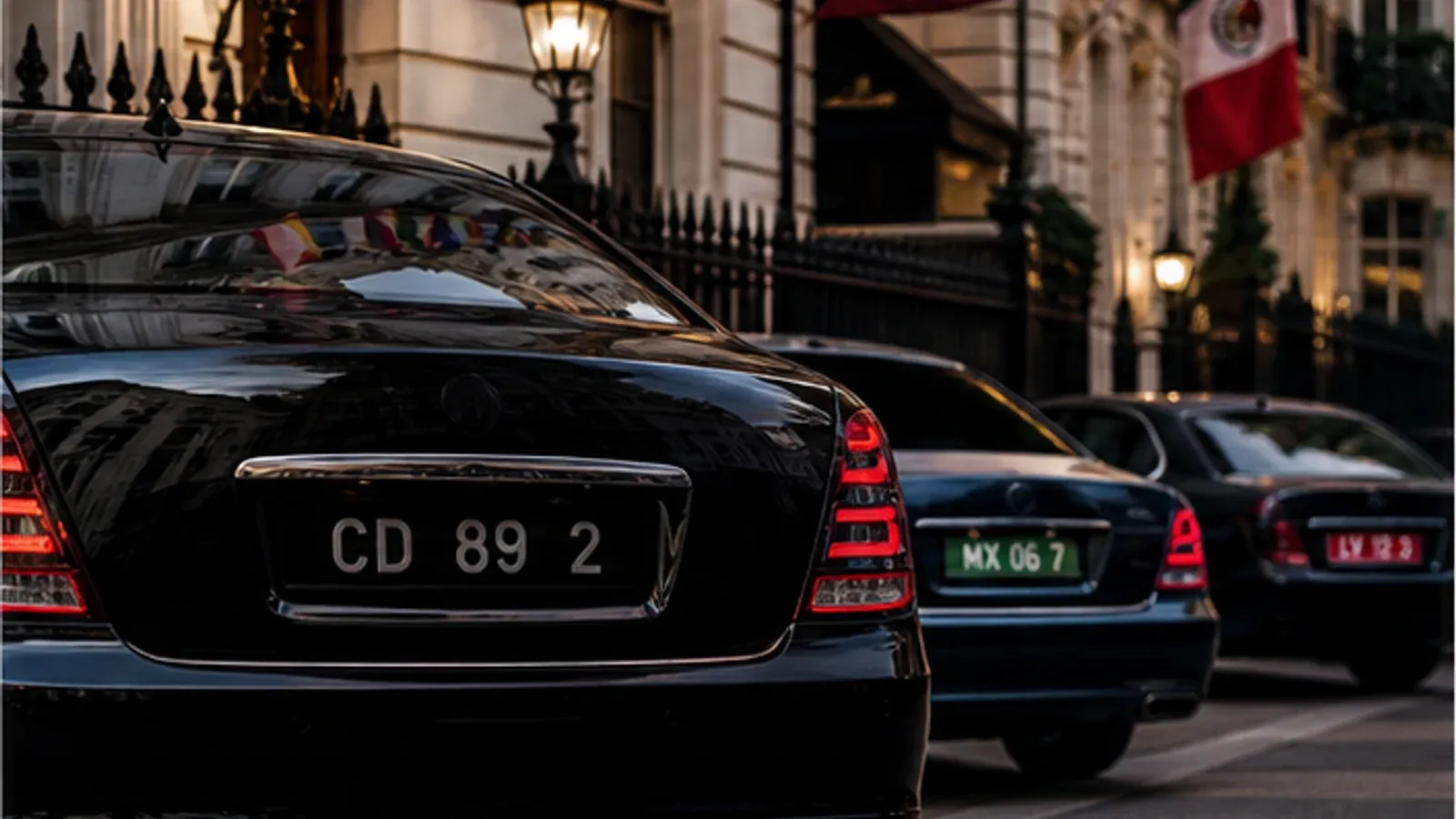
Plates mentioned
There is a category of private registration in the United Kingdom that sits entirely beyond the reach of the open market. No DVLA auction. No private dealer. No transfer document. They exist, they are some of the most desirable combinations ever issued, and if you want one, you simply cannot have it. Follow along and you will understand exactly why.
A Tradition Built on Diplomacy
Most embassies and high commissions operating in the United Kingdom hold a personalised registration for their diplomat's vehicle. It is a tradition that is older than most people realise, and one that carries genuine prestige far beyond the world of number plate collecting. The origins can be traced back to 1949, when NZ 1 became the first ever high commissioner registration issued in the United Kingdom. A single plate, a single country, and the beginning of a tradition that has since spread to nations across every continent. Today the practice is widespread, and the results are some of the most sought-after combinations in the country.
The Plates That Cannot Be Bought
Consider what these plates represent in market terms. Registrations of this format, short, meaningful, and tied to a nation's identity, would command extraordinary sums if they ever came to auction. They will not. But the values are worth contemplating regardless. Among the most notable currently held by diplomatic missions in the United Kingdom:
1 M 1 M belongs to Malaysia. MEX 1 to Mexico. 1 LUX to Luxembourg. 1 BE to Belgium. ROM 1 to Romania. 1 LIT to Lithuania. 1 ARG to Argentina. 1 BMS and 12 BMS to the Bahamas LAT 1A And LAT 1A to Latvia.
If any of these registrations came to market, which they cannot, they would almost certainly sell for hundreds of thousands of pounds. The most desirable among them could realistically approach seven figures. A single letter, a number, and a country abbreviation: the simplest formula in the private plate world, and entirely inaccessible to even the most serious collector.
The FCDO's Own Plate
The Foreign, Commonwealth and Development Office, formerly the FCO, sits at the centre of this tradition. It is through the patronage of its members that the practice of assigning personalised registrations to diplomatic vehicles was established and maintained over the decades. As a fitting footnote, the FCDO holds its own registration:
1 FCOa plate that carries the initials of the very institution responsible for the tradition existing in the first place.
What This Means for the Market
The diplomatic plate collection is a useful lens through which to understand value in the private registration world more broadly. The plates held by embassies and high commissions are not valuable because they were expensive to acquire. Many were obtained decades ago at little or no cost. They are valuable because of what they represent, because of their brevity and clarity, and because their unavailability makes them permanently, structurally unattainable.
In a market where rarity drives value, there is no rarer category than the one you are categorically prevented from buying.