The Feature / Deep Dives
D 4: A First in England's History
Plates mentioned
D 4 and England's First Ever Chauffeur
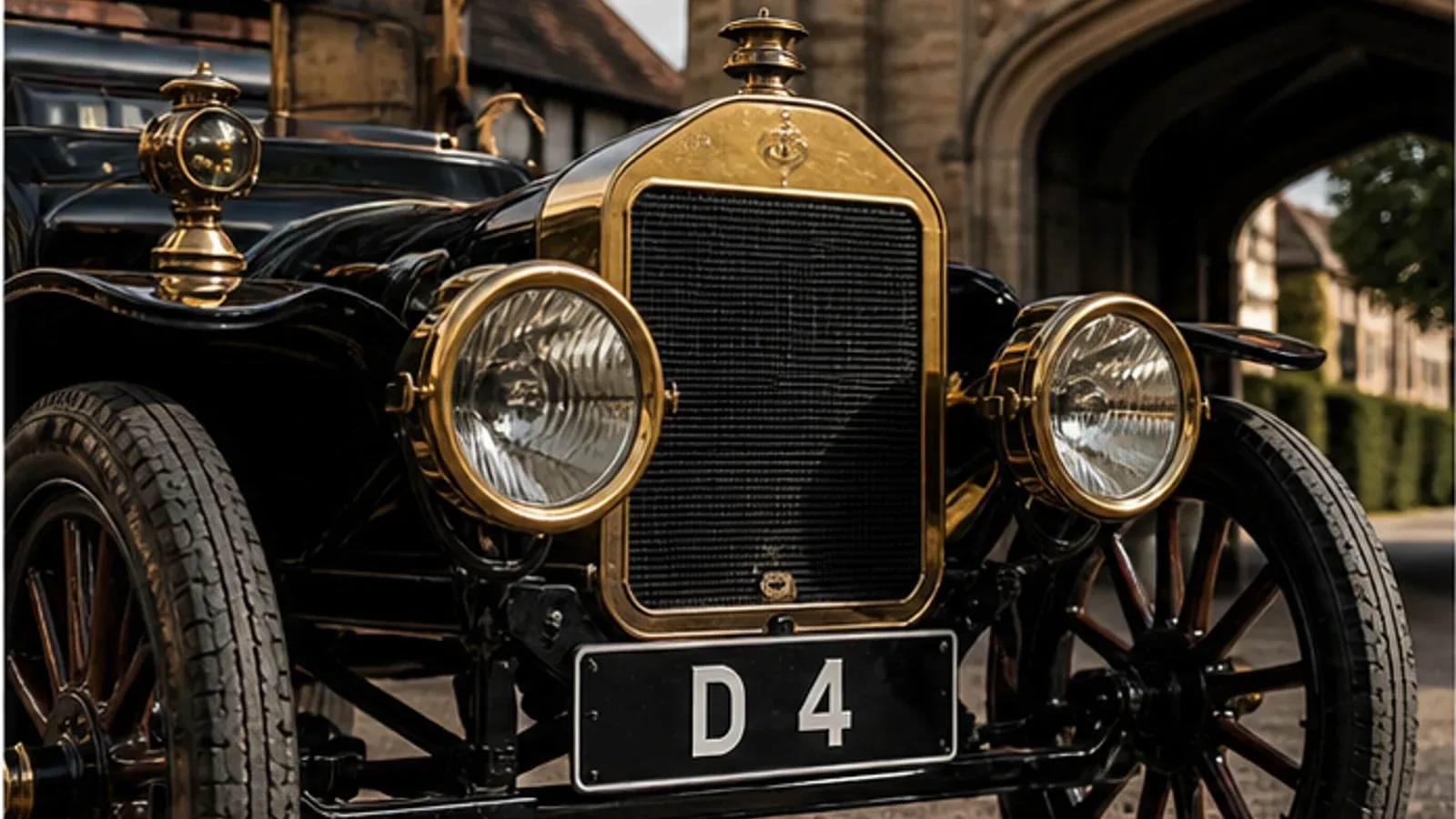
There are number plates with interesting histories, and then there is D 4. The story of this registration begins not in a dealership, not at a DVLA auction, but on the 30th of November 1903, the year that the Motor Car Act came into force and the United Kingdom began issuing vehicle registrations for the very first time. D was the county identifier for Kent, and on that date, a small sequence of plates was issued to one of the most remarkable figures in British motoring history. Sir David Lionel Salomons was not simply a wealthy man who happened to own cars. He was a pioneer in the truest sense of the word. From his estate at Broomhill near Tunbridge Wells, he organised the United Kingdom's very first motor show, the Horseless Carriage Exhibition of 1895, and personally sent 56,000 letters campaigning for the abolition of the Red Flag Act, the law that required a man to walk in front of every motor vehicle waving a flag. That campaign succeeded, leading directly to the 1896 Highways Act that gave the British motor car its freedom on public roads. He owned over 60 vehicles across his lifetime, long before car ownership was even a concept most people entertained. When registrations were introduced in 1903, Sir David set about acquiring a remarkable consecutive run of early Kent plates: D 3, D 4, D 5, D 6, D 7, D 8, and D 9. Seven single-digit D registrations, each assigned to a different car in his fleet. D 4 went to his Renault. D 5 to a Richard-Brasier. D 8 to a De Dion. D 9 to a Brouhot. Period cars, period plates, all moving through the lanes of Kent in the hands of one man who understood better than almost anyone what the motor car was going to mean for Britain. Driving those cars, including the one bearing D 4, was George Barclay, England's first ever chauffeur. Barclay held one of the very first driving licences issued in the country and was a constant presence alongside Sir David as he made his way through the early decades of British motoring. The image of Barclay at the wheel of a period car wearing D 4, with Salomons beside him, sits at the absolute beginning of the story of the private number plate in this country. Sir David died in 1925, and with him the baronetcy became extinct. The estate passed to his widow and daughters, the collection dispersed, and the plates went their separate ways. D 5 sold in 2018 for £264,000. D 3 is now held by a London business. D 8 belongs to Douglas Park of Glasgow. Each one has found its own path through the decades since that consecutive run was broken up. D 4 now sits on a Porsche. 122 years after it was first issued on a November morning in Kent, it is still on the road, still turning heads, still carrying a weight of history that very few registrations anywhere in the world can match. What was once a small purchase is now worth a fortune. But the value is almost beside the point. What D 4 represents is something that cannot be bought at any price: a direct, unbroken line to the very first morning that Britain put numbers on its cars.