The Feature / Guides
Council Owned Number Plates Guide
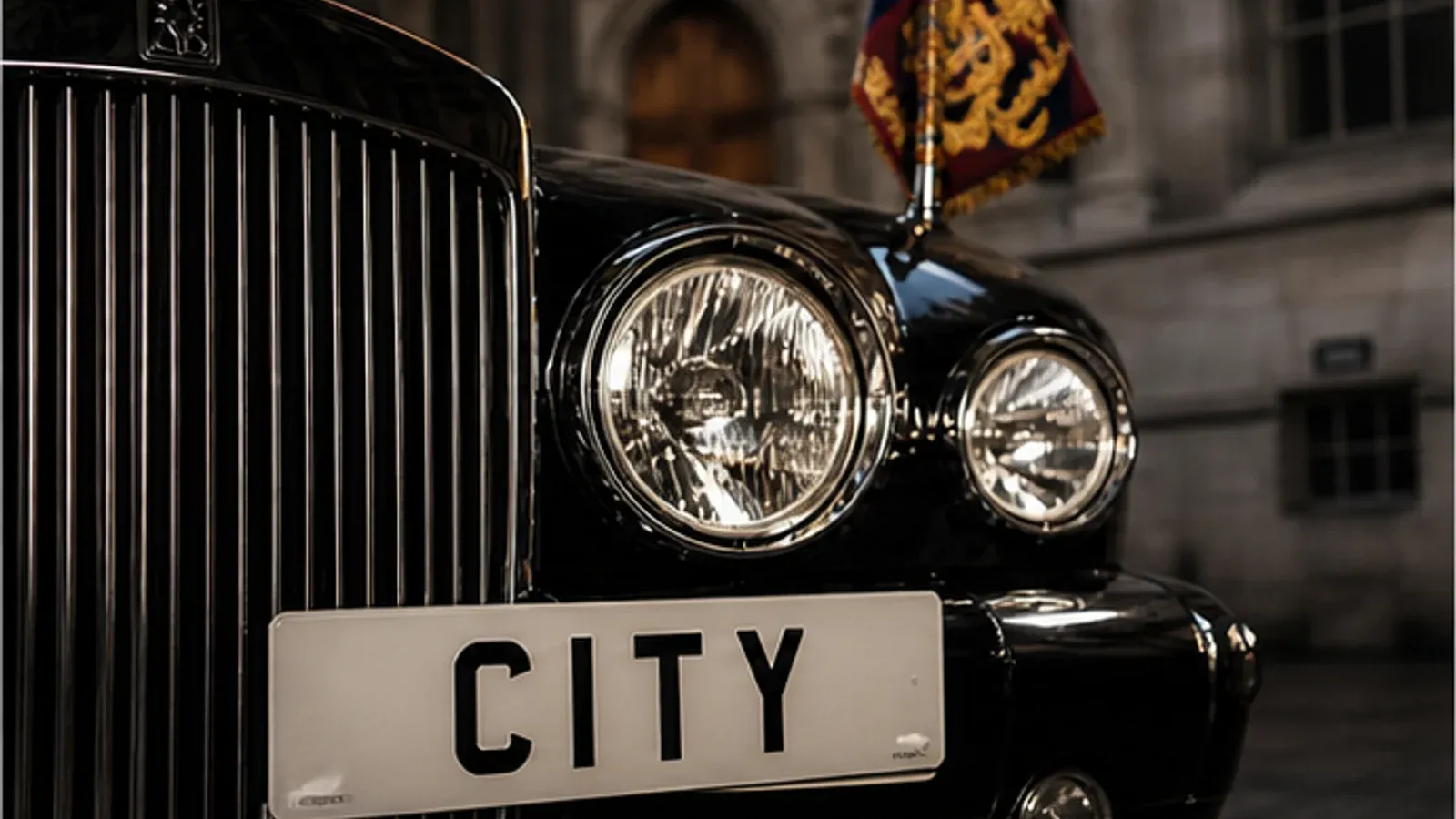
Plates mentioned
What is a council-owned number plate?
Council-owned number plates are private registrations held by UK local authorities — typically at single-digit, single-letter, or short-form configurations. They were issued in the very early years of motor registration, when each council ran its own local register, and many of those original blocks have remained continuously held by the same authority ever since.
These are not plates that come up in the normal DVLA auction stream. They sit in council possession until the authority decides to release one, which happens rarely and almost always with a press release attached. When they do come to market, the prices reach the very top end of what UK plates have ever sold for.
How the early system worked
When motor registration began in the UK in 1903, councils were given two-letter local memory tags and issued numbers sequentially: A 1 to London, B 1 to Lancashire, C 1 to West Riding of Yorkshire, and so on. The first few numbers issued in each block were quietly retained by the council itself, often for the chairman's car, the mayoral vehicle, or the chief surveyor.
That meant a council might end up holding A 1, A 2, A 3, B 1, B 2, B 3 — the lowest, most desirable combinations from its own series. Most councils kept these on the books even after the original cars were retired. They were placed on retention or, more commonly, simply moved across to a successor official vehicle.
Over time, local government reorganisation absorbed those councils into county councils and then unitary authorities. The plates moved with the records: a registration first issued by, say, Surrey County Council in 1903 may now sit with the modern unitary authority that inherited the old county's vehicle register.
Why they're so valuable
Three things drive council plate values into a category of their own.
First, the structural quality is exceptional. A 1, B 1, C 1 — these are dateless plates of the shortest possible form, and length is the single biggest pricing factor in the UK plate market. A 4-character dateless plate already sits well above any prefix or current-style plate; a 2-character dateless is in a separate league.
Second, supply is essentially zero. Most councils don't sell. The few that have done so have done it once in a generation. A buyer cannot wait for the next one to come up — they have to take whatever opportunity appears.
Third, the provenance is unimpeachable. A council-owned plate has a continuous documented history from the day it was first issued. There's no question of fraud, no concern about a previous holder's claim. For a buyer paying seven figures, that matters.
Notable council sales
The most famous council disposals all set records at the time of sale.
Essex County Council sold F 1 in 2008 for £440,000. The buyer was a Bradford-based businessman; the plate had been on the council's official Daimler since the 1950s. Coverage at the time noted that the proceeds were earmarked for the council's general fund rather than any specific project — a pattern that would repeat in later sales.
Cornwall County Council disposed of CC 1 in 2002 for around £74,000. Modest by later standards, but the precedent it set was significant: a council had sold its own initials, openly, at public auction.
Oldham Council put the plate 1 OM up for sale in 2008. It made just over £100,000 against an estimate of £75,000.
Banffshire's BNF 1 — kept by the council since 1908 — went to auction in 2010 and sold for £45,000. The new holder placed it on a Bentley.
The most notable recent council-related sale is 25 O , which was originally registered to Essex County Council and reached £518,000 in 2014, making it at the time the most expensive UK number plate ever sold at public auction.
Why councils sell
The decision to release a plate is rarely simple and usually involves a public consultation or at minimum a council vote.
Budget pressure is the most common driver. A plate that's been sat on the chairman's car since 1908 is, on a practical level, an unrealised asset on the balance sheet. When budgets tighten, finance officers start asking whether £400,000 of plate value is really doing more good attached to a Daimler than spent on potholes or social care.
Modernisation is another. Some councils have actively chosen to retire the tradition of mayoral plates, viewing them as anachronistic or as a symbol that doesn't sit well with current civic priorities.
Occasionally a sale is forced by reorganisation: when a council is abolished and absorbed into a new unitary authority, the inherited assets are reviewed and some plates end up on the disposals list rather than transferred onwards.
In every case the sale has to be approved publicly. There's no quiet back-channel route — these plates show up at Bonhams, at the DVLA Personalised Registrations auction, or via specialist dealers acting on the council's behalf.
What's still held
The majority of original council allocations remain in council hands. A complete public list isn't maintained, but the pattern is well understood: virtually every county-level authority that existed before the 1974 reorganisation retained at least one short plate from its original block, and many still do.
A few examples that remain (or remained until very recently) on council vehicles:
- A 1 — Westminster City Council. Among the most valuable unsold plates in the country. Has appeared on the mayoral car for over a century. - B 1 — Lancashire County Council. Long associated with the chair of the council. - D 1 — Kent County Council. Used on the council chairman's vehicle. - BD 1 — Northamptonshire County Council. - TY 1 — Northumberland County Council.
These are not for sale. Speculation about hypothetical valuations is just that — speculation — but A 1 specifically has been informally valued in the millions on every occasion the question has been raised in print.
Can a private buyer ever acquire one?
In principle, yes. In practice, it requires the council to decide to sell, the sale to be approved publicly, and then the buyer to outbid everyone else who has been waiting for that exact opportunity for decades.
The realistic path is to register interest with specialist dealers who maintain relationships with local authority finance teams. When a disposal is being considered, those dealers tend to be consulted early — both to advise on valuation and to provide an indication of likely buyer demand. That doesn't get a buyer to the front of the queue, but it does mean they hear about it before the auction listing goes public.
The other route is patience. Council disposals are almost always announced through the auction houses (primarily Bonhams' annual UK plate sale and the DVLA's own personalised registrations sale). Anyone serious about acquiring a council plate watches those catalogues every cycle.
What this means for sellers of comparable plates
Council plates inform the top of the market. When a council releases a 1- or 2-character dateless plate, the result resets expectations for every comparable plate held privately. A 3-character dateless held by a private seller in 2008 was priced very differently after the F 1 sale than before it.
If you hold a short dateless plate, the council comparables matter — even if your plate has different provenance. Dealers benchmark against the most recent public sale at that structural level, and council sales are some of the few public data points available for the very top of the market.
That's the practical takeaway: council plates aren't just curiosities. They're the comparables that anchor the upper end of every dealer's pricing model.